Design mockup. Clay Bluff Aviation is not a real company and this page is not a real charter operator's website.

Clay Bluff Aviation (816) 555-0142
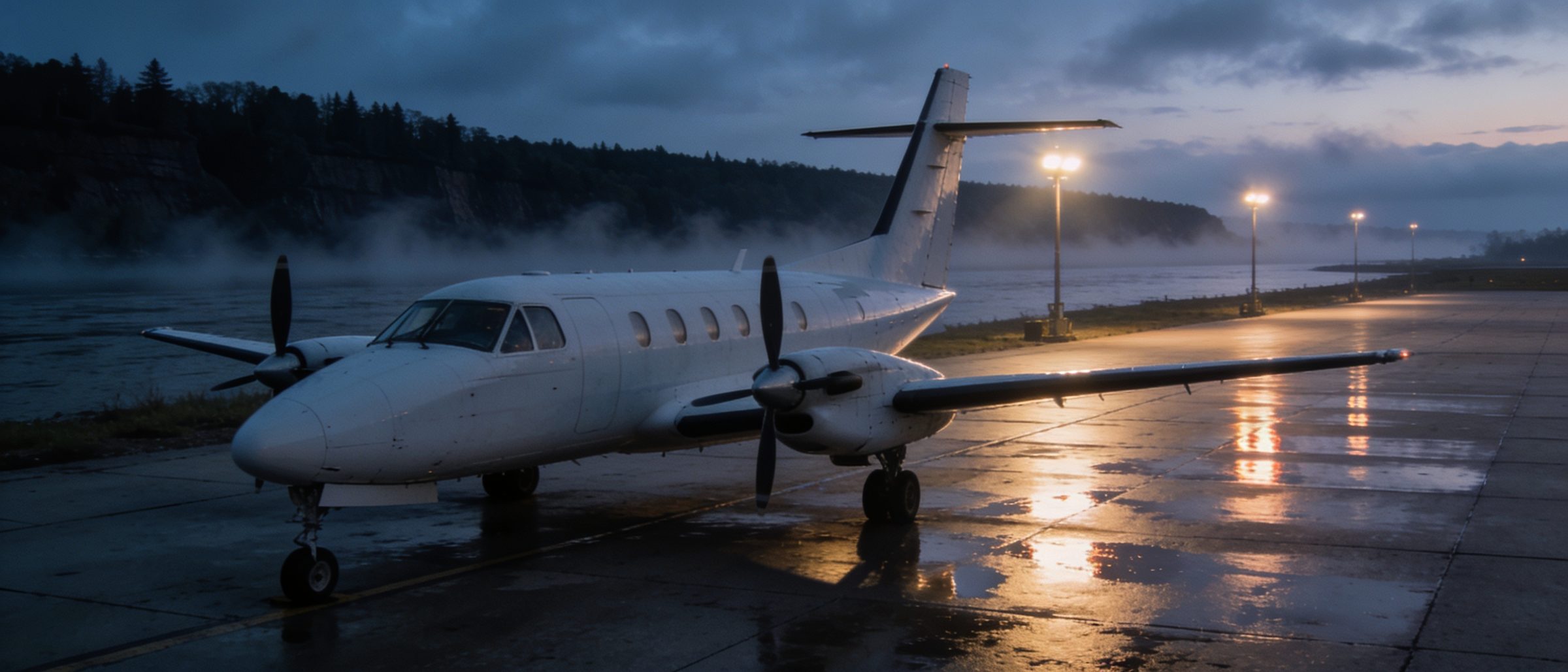
A white twin-engine turboprop parked on a wet ramp at first light, ramp floodlights reflecting off the pavement, fog lying over the water and a wooded bluff behind.

Charter, Kansas City Downtown Airport

Every leg has
one limit.

Runway, weight, range, crew day. Four things run out on a charter, only one of them runs out first, and it is almost never the one the brochure talks about. We tell you which one binds on your leg before you agree to anything.

Read the four limits Call dispatch, (816) 555-0142

How a quote is actually built

Nobody is limited by four things at once.

A charter quote is a series of subtractions. The airplane has a maximum weight, and the fuel and the passengers share it. The tank has a volume, and the reserve takes a third of it before the trip starts. The runway at the far end has a length, and the air over it has a temperature. The crew has a day, and it began before you woke up.

Run those four in order and one of them fails first. That number is your trip. The other three are irrelevant and quoting them at you is noise.

Below are the four, in the order our dispatch works them, with the actual figures for the airplanes we operate and one real leg where each one is the thing that binds.

Limit one, runway

Pavement is the easy half. Air is the other half.

Our home runways are long. Wheeler Downtown has 6,827 feet of concrete on 1/19 and 5,050 feet of asphalt on 3/21, at a field elevation of 757 feet. A King Air 350i at maximum weight needs about 3,300 feet of balanced field length at sea level on a standard day. At home, on any day, pavement is not the conversation.

It becomes the conversation the moment the far end is high or hot. Runway length is a fixed number painted on the ground; the distance the airplane actually needs is not, and it grows with elevation, temperature and weight. A field with more pavement than Wheeler can still be the tighter operation.

Aspen is the standing example. 8,006 feet of runway, which is more than we have at home, sitting at 7,820 feet of elevation with terrain on the departure. The pavement is not the limit there. The air over it is, and on a warm afternoon the answer is that we take fewer people or we go somewhere else and drive.

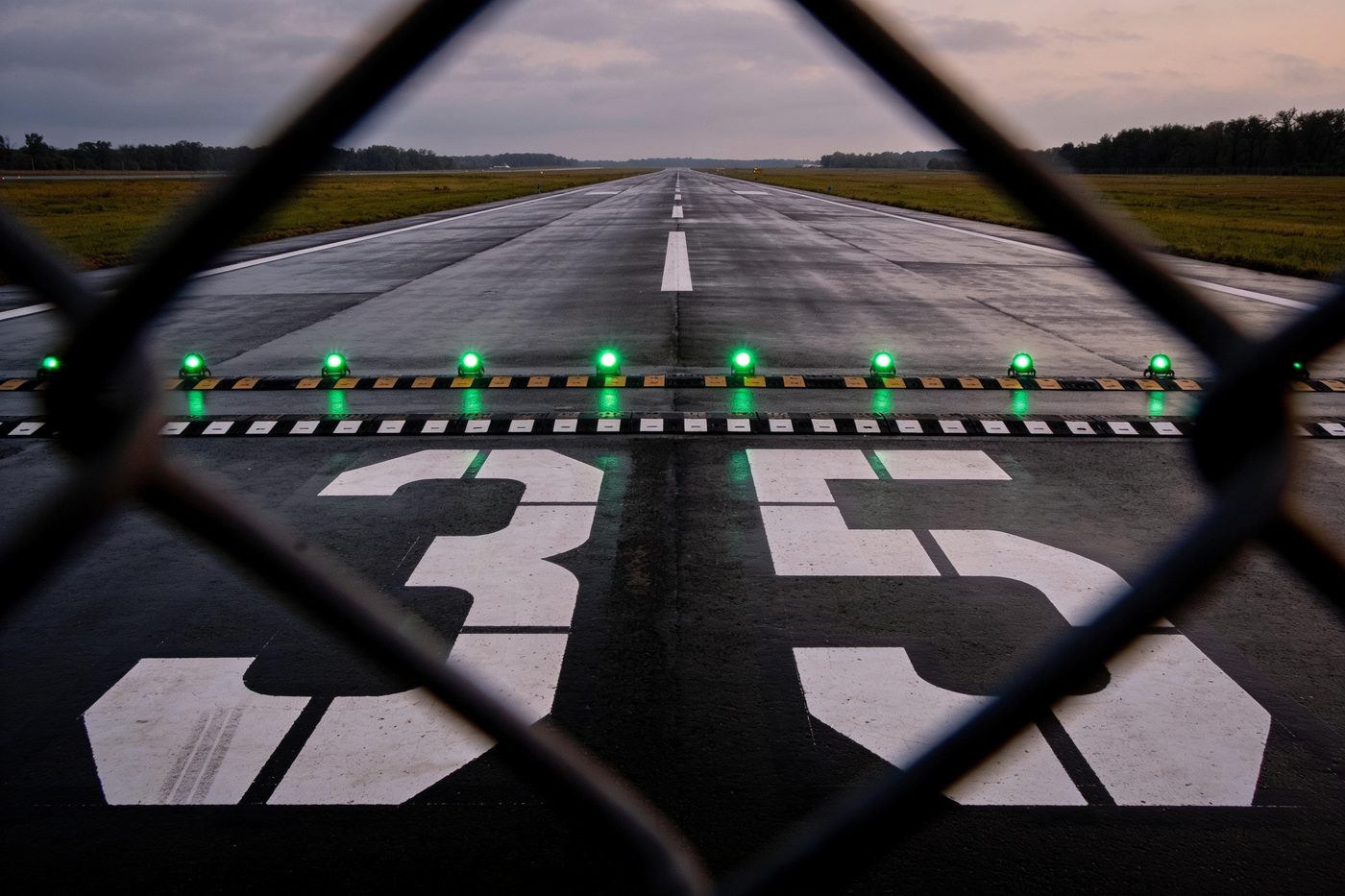
A runway threshold at dusk seen through a chain link fence, the numbers 35 painted large on wet asphalt with a row of green threshold lights across the width.
The number painted on the ground is fixed. What the airplane needs on any given afternoon is not.

Runway available, against what the airplane asks for

Wheeler 1/19, concrete

6,827 ft

Wheeler 3/21, asphalt

5,050 ft

Teterboro 1/19

7,000 ft

Jackson Hole 1/19

6,300 ft

350i balanced field, sea level, max weight

3,300 ft

Scale runs to 9,000 feet. Published runway lengths; the 350i figure is the manufacturer's balanced field length at sea level on a standard day, and it is a floor, not a promise.

Four fields we fly to, and what the runway is really telling you
FieldLongest runwayElevationWhat actually binds
Wheeler Downtown, Kansas City6,827 ft757 ftNothing. Full load, any day.
Teterboro, New Jersey7,000 ft9 ftNot the runway. Range, and the slot.
Jackson Hole, Wyoming6,300 ft6,451 ftSummer afternoons. Margin thins fast.
Aspen, Colorado8,006 ft7,820 ftDeparture performance, not pavement.

Limit two, weight

Fuel and passengers are the same pound.

This is the one that decides most trips, and it is the one nobody explains. The airplane has a single number it may not exceed on the runway, and everything on board comes out of it: the airplane itself, the crew, the fuel, and you.

Our 350i weighs 10,050 pounds ready to fly with two pilots aboard. It may not leave the ground above 15,000. That leaves 4,950 pounds, and the fuel is drawn from the same 4,950 as the passengers. Longer leg, more fuel, fewer seats. There is no third option and no operator can sell you one.

There is a second ceiling underneath it that catches people out. The airplane may not weigh more than 12,500 pounds with no fuel in it at all, which caps the payload at 2,450 pounds no matter how short the trip is. On a short leg you run out of that limit long before you run out of takeoff weight, and roughly 900 pounds of capacity simply sits there unusable.

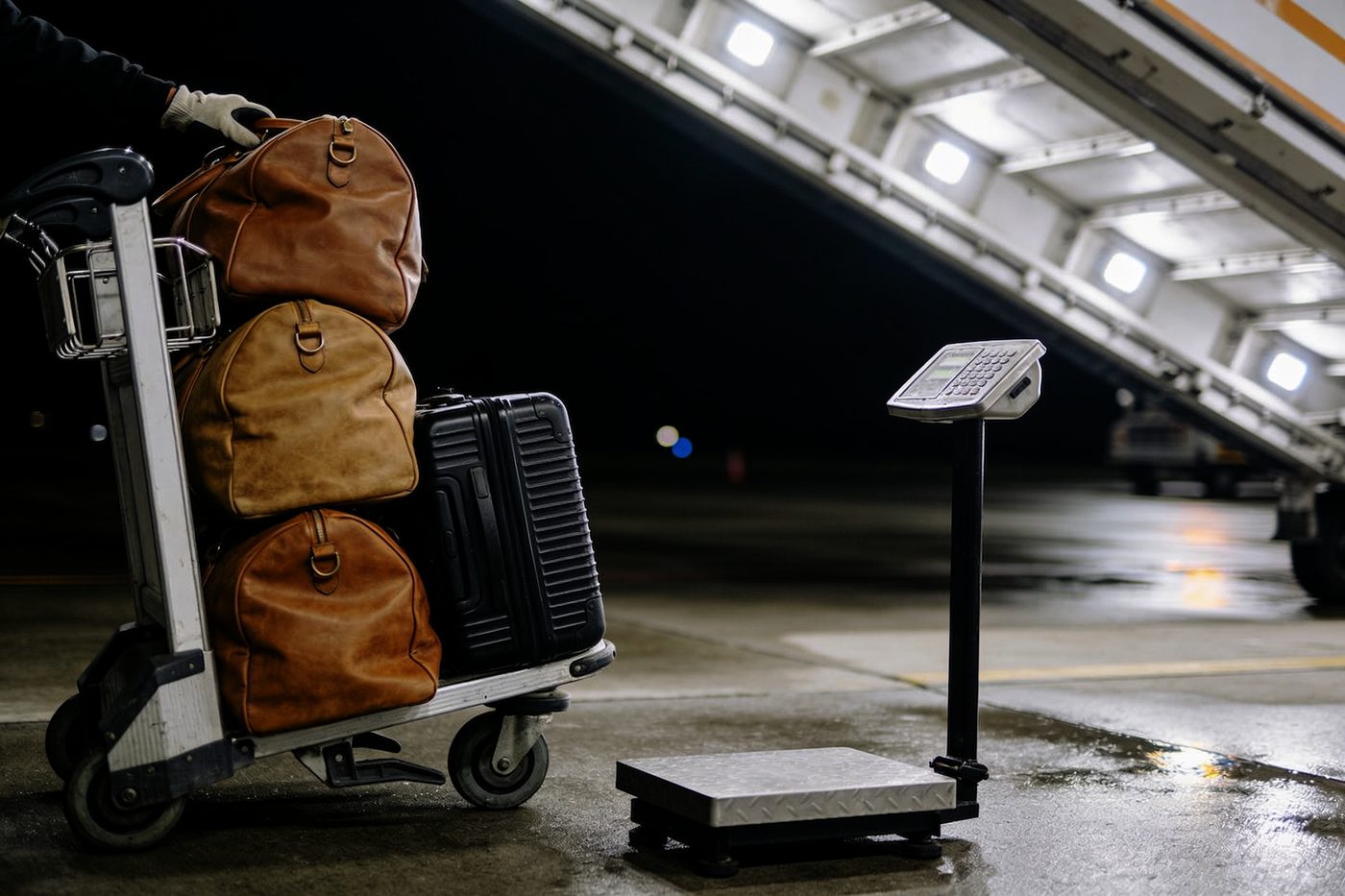
Three leather duffel bags and a hard case stacked on a baggage cart beside a platform scale on a wet ramp at night, a gloved hand steadying the top bag, airstairs behind.
Everything gets weighed. Bags, catering, the water, and you. Nobody enjoys this part and it is the only honest way to quote.

One airplane, three trips. Watch the payload go.

Short leg, about 350 nautical miles Kansas City to Chicago

Airplane and crew
10,050 lb
Fuel
1,600 lb
Payload
2,450 lb
Unusable
900 lb

Nine seats, and 380 pounds left over for skis.

Medium leg, about 850 nautical miles Kansas City to Scottsdale

Airplane and crew
10,050 lb
Fuel
3,050 lb
Payload
1,900 lb
Unusable
none

Eight seats. This one leaves at exactly 15,000 pounds.

Full fuel, as far as it goes Kansas City to Teterboro

Airplane and crew
10,050 lb
Fuel
3,611 lb
Payload
1,339 lb
Unusable
none

Five seats and hand luggage, or nine seats and a fuel stop.

Bars drawn to a common scale of 15,000 pounds, the maximum takeoff weight. Seat counts assume 230 pounds per person including a checked bag, which is the number our dispatch plans on and the number we will use on your quote. Give us your real weights and the answer usually improves.

Limit three, range

A third of the tank never touches the trip.

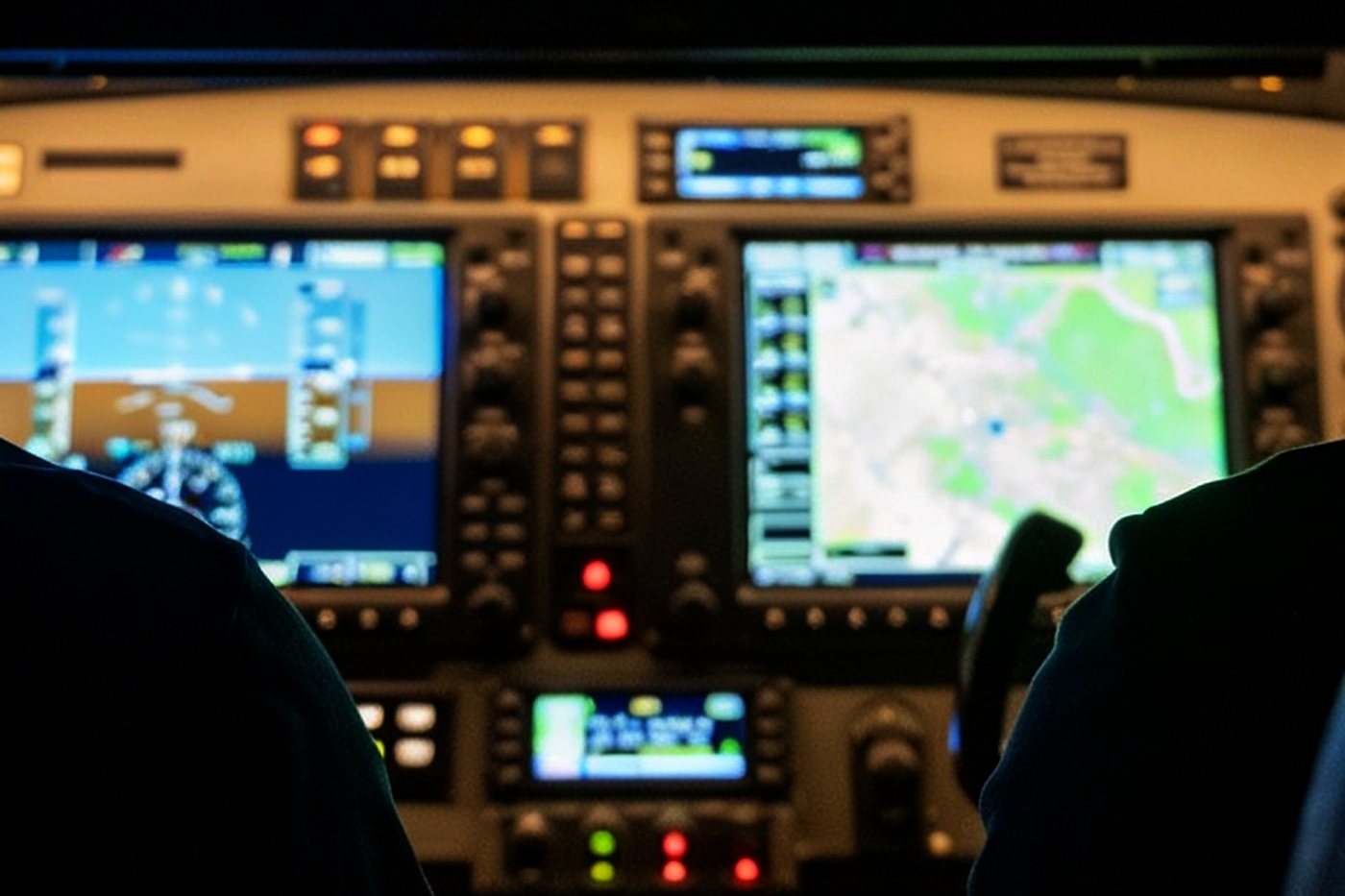
A lit instrument panel seen at night between the shoulders of two pilots, a primary flight display on the left and a moving map on the right, red and green annunciators below.
Three hours out of Kansas City at night. The fuel that got us here is the smaller half of what was loaded.

The 350i holds 3,611 pounds of usable fuel, which is 539 gallons. That is not 539 gallons of going somewhere. Taxi and run-up take a slice. The trip takes the largest slice. Then the rules and the weather take three more, and they are not optional: enough to fly to an alternate airport if the destination goes down, enough to hold for forty-five minutes after that, and on a westbound winter day a real allowance for a headwind that can take fifty knots off the groundspeed for four hours.

Add those up and roughly 1,400 pounds of the tank is committed before a single mile counts. An operator who quotes you the still-air range off a brochure is quoting a number that has never once been flown.

Practically: about 1,100 nautical miles is the honest still-air number with the reserves in place, and westbound in January it is closer to 850. Teterboro is inside it. Naples in February usually is not, and we will say so rather than plan a fuel stop we did not tell you about.

3,611 pounds of fuel, and where it actually goes

Taxi and takeoff
150 lb
The trip itself
2,200 lb
Headwind allowance
300 lb
To the alternate
350 lb
Final reserve, 45 minutes
600 lb

A representative winter westbound plan at maximum fuel. The exact split changes with the weather at the destination and with which alternate the forecast supports, and it is worked fresh for every leg.

Direct distance from Wheeler Downtown, rounded, and what it means in seats
DestinationDirectNonstopCabin
Dallas Love Field390 nmYesNine seats and the bags
Denver Centennial465 nmYesNine seats and the bags
Aspen610 nmYesSee limit one before you book
Teterboro950 nmYesFive seats, or nine and a fuel stop
Naples, Florida1,040 nmUsually not in winterNine seats, one planned stop

Limit four, the crew day

The day ends before the airplane does.

The airplane will fly all night. The two people flying it will not, and the limit is federal, not a preference of ours. Our dispatch plans a fourteen hour duty day, measured from the moment the crew shows at the hangar to the moment the airplane is chocked at the end, and ten hours of rest before the next one starts.

Fourteen hours sounds enormous until you lay a real day across it. A 6:00 a.m. departure means the crew showed at 5:00. Two and three quarter hours out, a day at the far end, two and three quarter hours home, half an hour to put the airplane away. The clock runs out at 7:00 in the evening whether your dinner did or not.

So we ask for your return time before we quote the outbound, and if the day does not close we tell you the two ways out, an overnight or a second crew, and what each one costs, at the quote and not at the gate.

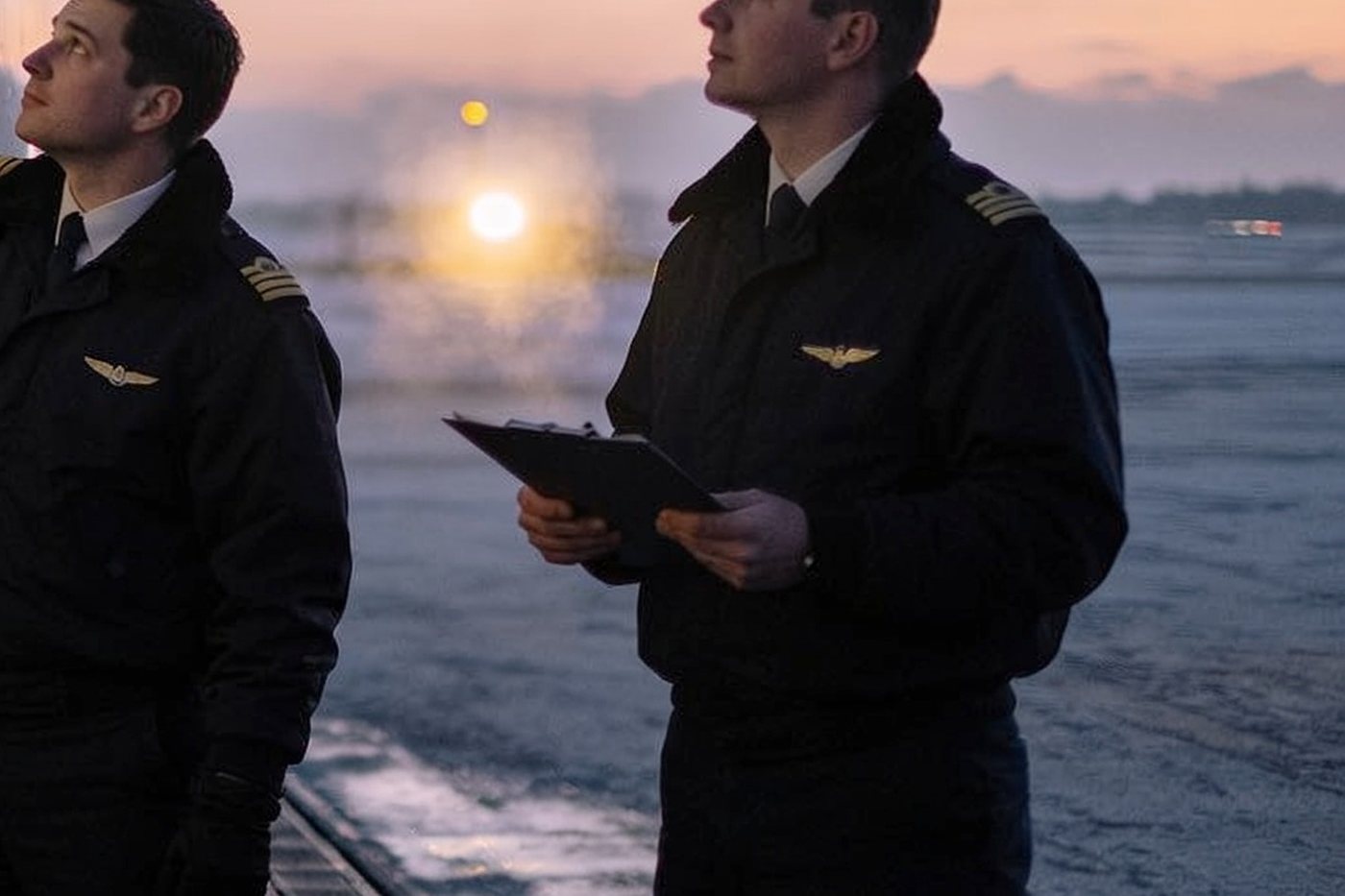
Two pilots in dark uniform jackets standing on a frosted ramp at first light, one holding a clipboard, both looking up at the aircraft above them.
The first hour of the duty day happens before sunrise and nobody is paying for it by the mile.

Fourteen hours, spent

Show and preflight
1:00
Outbound leg
2:45
On the ground at the far end
5:30
Return leg
2:45
Shutdown and paperwork
0:30
What is left
1:30

A same-day round trip of about 800 nautical miles each way. Ninety minutes of margin covers a late passenger and a holding pattern. It does not cover a two hour delay, and when it goes we will have told you first.

The other half of the answer

What we do when one of them binds.

A limit is not a refusal. Every one of the four has a way around it, all four ways cost something, and the difference between an operator you use twice and one you use once is whether you heard about the cost at the quote or at the airplane.

  1. 01

    Runway binds

    We move you to a longer field within a reasonable drive and arrange the car, or we send the PC-12, which gets off in roughly a third less pavement and takes eight. Mountain fields in July usually resolve to an early departure instead, before the air heats up.

  2. 02

    Weight binds

    A planned fuel stop costs about forty minutes on the ground and buys back three or four seats, which is nearly always the right trade for a full group. If it is the bags rather than the people, the bags go on an airline and meet you, and we book that ourselves.

  3. 03

    Range binds

    One stop, planned, at a field we already use, with the truck called ahead so the wheels are turning again inside thirty minutes. You will see the stop on the itinerary before you sign it. We do not discover fuel stops in the air.

  4. 04

    Crew day binds

    Either the crew stays over and you come home in the morning, or a second crew is positioned to the destination on an airline to fly the return. The second option is faster and it is the more expensive one. Both are priced in the quote, not added afterward.

What we operate

Two airplanes, and they are good at different things.

Beechcraft King Air 350i

Two turbine engines, nine passenger seats, a stand-up cabin and a belly locker. This is the one that carries a full group and their luggage, and it is the one every number on this page is worked against.

350i, our airplane as configured
Passenger seats9
Maximum takeoff weight15,000 lb
Maximum zero fuel weight12,500 lb
Ready to fly, two pilots10,050 lb
Usable fuel3,611 lb / 539 gal
Balanced field, sea levelabout 3,300 ft
Planning cruiseabout 300 kt

Pilatus PC-12 NGX

One turbine engine, eight seats, a cargo door wide enough for things that do not fit through a passenger door. Shorter fields, smaller groups, and the one we reach for when limit one is the problem.

PC-12 NGX, our airplane as configured
Passenger seats8
Maximum takeoff weight10,450 lb
Ready to fly, two pilotsabout 6,800 lb
Usable fuel402 gal
Takeoff over 50 ftabout 2,485 ft
Planning cruiseabout 285 kt
Cargo doorYes
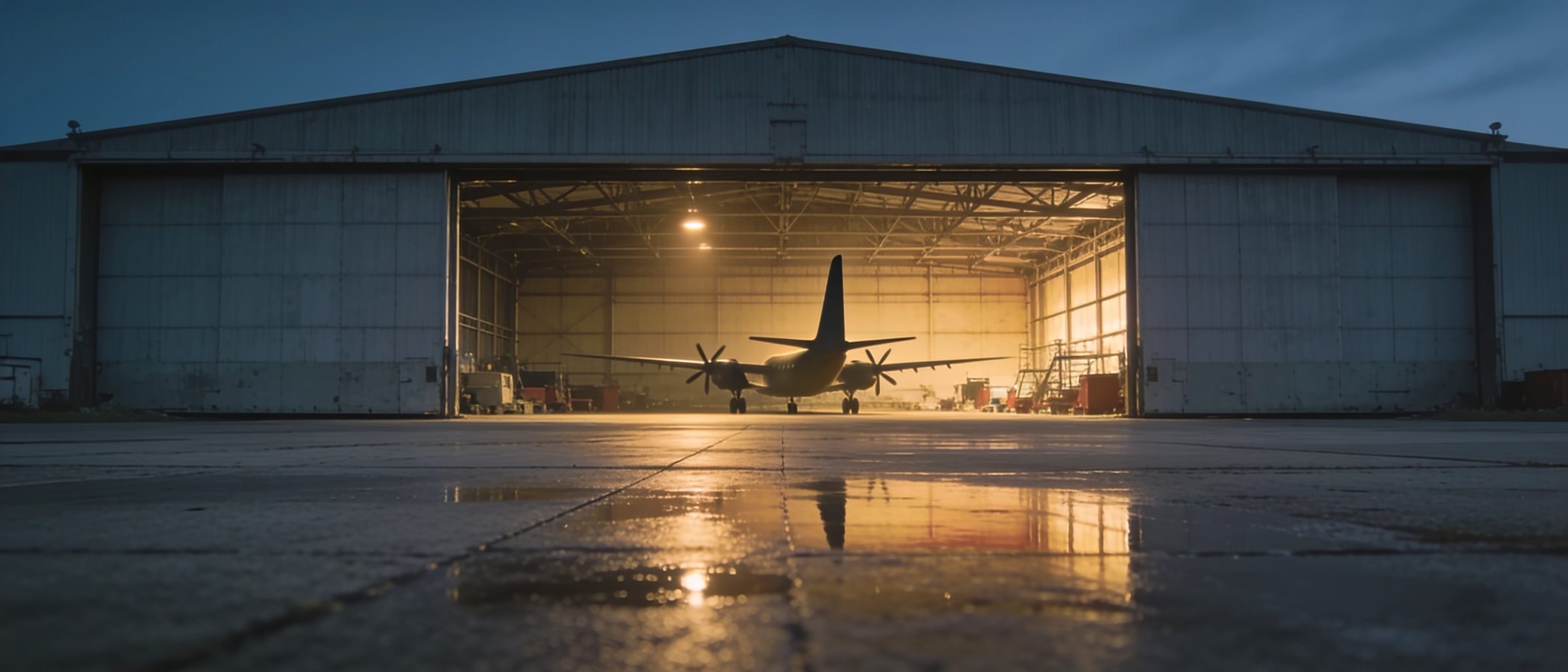
An open hangar door at dusk seen across an empty wet apron, warm interior light spilling out onto the concrete, a turboprop silhouetted inside.

Dispatch

Tell us the four corners and we will tell you the limit.

Where from, where to, how many people, and what time you need to be back. That is enough for a real answer, usually inside the hour. If one of the four limits bites, you will hear which one and what it costs to get around it in the same call.

Call

(816) 555-0142

Dispatch answers around the clock. The office is 7:00 a.m. to 6:00 p.m., Monday to Friday.

Find us

123 Rampside Rd, Hangar 4
Kansas City, MO 64105

Charles B. Wheeler Downtown Airport, north side, past the fuel farm. Park at the gate and call from the car.

Bring

Photo identification for every passenger, and a real weight for anything unusual: golf clubs, ski bags, a dog, a case of equipment.

The dog is fine. We just need to know about the dog.